/ resources
February 5, 2025


Guest Writer, Bizrate Insights
Between managing inventory, marketing your products, and keeping customers happy, writing ecommerce product descriptions might not be your top priority. But product descriptions can make or break a sale — a recent Google survey found that 85% of shoppers say product information and photos are crucial in deciding which brand to purchase from.
If you’re not a professional writer, crafting the perfect description may seem daunting. But it doesn’t have to be. Let’s look at how to transform your product descriptions using clear, compelling information and leveraging user-generated content (UGC) to your advantage.
To write product descriptions effectively, follow these best practices:
Not a wordsmith? No problem. To begin, stick to a simple template. Here’s an example:
Now, let’s break down some product description writing tips for each section.
To borrow Shopify’s tip, start with the word “Imagine” and describe how your audience will feel when they use your product. Then, use what you’ve written to craft an inspirational tagline and/or a brief intro about how your product will enhance the customer’s day-to-day life. This will help you get inside the mind of your customer, which is necessary for writing an impactful product description.
Use bulleted lists or headers with brief descriptions to give customers important info on your product, such as ingredients, dimensions, compatibility, or materials at a glance. The goal is to be specific but avoid complex jargon, vague abbreviations, or overly technical language.
Flesh out your bullet points or headers from step two to convert your product’s features into benefits. Use the “problem-solution” framework here — tell your customers how your product solves a problem they might have. While doing so, appeal to the customer’s senses. Think about how your product feels, tastes, looks, or smells, and work that into your description to bring the product to life.
End with a simple call-to-action statement inviting customers to buy. It may help to add a sense of urgency when appropriate, such as calling out “limited availability” for seasonal items or limited-time discounts.
Here’s another writing hack: You can use customer feedback for product descriptions. UGC can provide valuable insights on how to appeal to potential buyers. For instance:
If you need assistance gathering customer feedback, Bizrate Insights can help you collect and leverage direct customer insights through our Online Buyer Survey. All our plans include access to our powerful Site Abandonment Survey as well. These solutions provide valuable UGC that you can use to refine your product descriptions.
Your product descriptions are more than just a sales pitch — they’re a tool for driving more traffic to your site through search engine optimization (SEO).
To write SEO-friendly product descriptions, you must first identify the keywords you want to rank for. The more specific, the better. Try to target long-tail keywords, which are highly specific search queries. These have a lower search volume and, therefore, a lower keyword difficulty. This can help you attract highly targeted traffic with a greater intent to convert.
Just make sure to incorporate keywords naturally into your product description. Google doesn’t like the practice of “keyword stuffing,” which it lists as a no-no in its spam policies.
Now, let’s see these tips in action. Here’s a weak product description for some hypothetical wireless noise-canceling headphones:
Does this cover the basic features of the product? Sure. Is it effectively conveying how the headphones will enhance the customer’s life? Not so much.
Let’s try again using our template and writing tips discussed above:
Escape the noise. Find your focus.
Our Wireless SoundPro Noise-Canceling Over-Ear Headphones are engineered for those who value premium sound and unparalleled comfort. Elevate your listening experience with:
Ready to escape the noise? Invest in a pair of SoundPro Noise-Canceling Headphones today and find your focus.
This description focuses on how your product features benefit the customer. It addresses potential concerns upfront (e.g., minimized static, ear comfort, quick charge), uses sensory language to help the buyer visualize the product, incorporates useful keywords, and ends with a clear call to action.
Improving your ecommerce product descriptions doesn’t require a degree in writing — just a little time and attention to detail. Start with the problem-solution framework, incorporate some sensory language to help the customer visualize your product, and be sure to use customer feedback to address common concerns up front.Ready to take your product descriptions to the next level? Book a demo with Bizrate Insights today and see how our solutions can help you optimize your product listings for success.

Amazon’s Prime Day 2026 sale gives us a clear look at how online shoppers respond when urgency, discounts, and...

Qualtrics is one of the best customer experience and market research platforms on the market, but not every ecommerce...
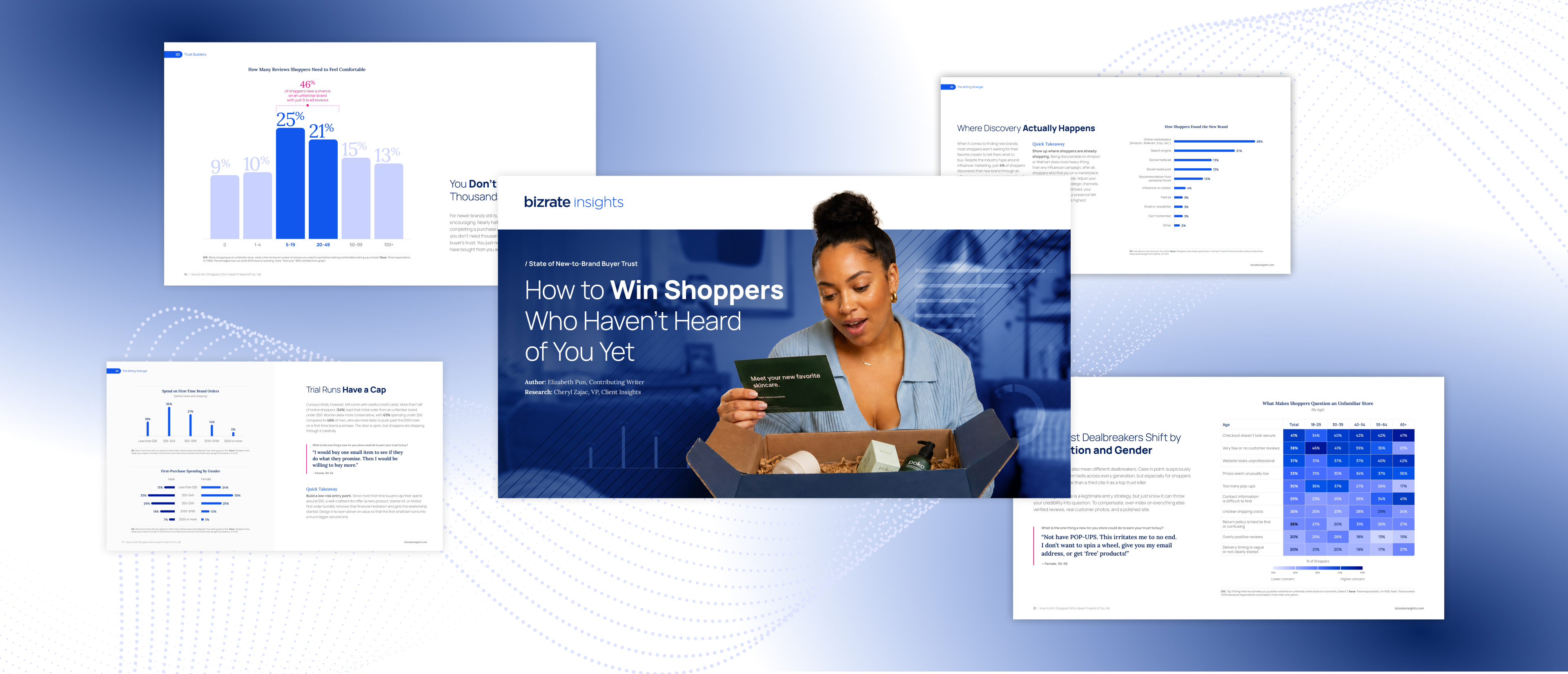
First-time buyers are out there, and they’re willing to spend with you if you can put them at ease. Our latest research shows what helps shoppers feel ready to take a chance on a new brand.


