/ resources
August 1, 2024


Content Director, Bizrate Insights
Shoppers know the ropes and are passionate about the places they shop, the products being sold, and the experiences they seek. The shopping journey must be well conceived, which means retailers large and small always deliver compelling, rich experiences supported by all available customer service options. Saving shoppers time and money always resonates in growing the online channel. This starts with purchasing but now even extends to free returns.
Ultimately, the goal is high satisfaction, and as the numbers indicate, online retailers are realizing great success:
We conducted nine consumer insights surveys in the first half of 2024. I’ve chosen nine essential tenets to highlight what we learned about today’s online shoppers. With each, I’ve included one finding that truly stood out for me. Some may sound familiar, while others were a bit of a surprise.

At the end of 2023, as shoppers were spending more for the holidays, many revisited yearlong purchasing and thought about how best to approach the coming year. In our first survey of the year, Bizrate Insights wanted to find out what online shoppers believe, so we inquired about what best describes their budgeting process and the categories and channels where they anticipate purchasing.
56% of those surveyed admit they aren’t budgeters. The most significant response group, 38%, was in the “No Budget” column, which said they don’t follow a strict budget but acknowledge they have a sense of what they spend. The remaining 18% have no budget and fluctuate based on wants and needs.
The remaining 44% acknowledge that they do some budgeting. Of the “Budgeters” group, 25% review and adjust throughout the year. Thirteen percent have their way of handling it, and 6% should be admired for sticking to their budgeting plans.

It has been a tumultuous time as consumers inform themselves and express concern for climate change while also taking a growing interest in issues ranging from human rights to social justice. Retailers have been pressed into action, knowing they play an integral role and must decide how to adapt and portray their values online for both customers and prospects. Because of the media, 48% of respondents always look or are much more aware of how values are portrayed.
It’s certainly positive to see the level of awareness and, more importantly, how frequently online shoppers consider a retailer or brand’s values when shopping. We can only expect these levels to rise exponentially over time.

The challenge is to close the gap where there is interest and shoppers feel compelled to purchase what they know is sustainable. For example, Electronics/Technology, while important to 45% of respondents, only sees purchasing among 26%. Clothing/shoes follows a similar pattern where the category is important to 53% but again sees lower purchasing rates at 41%. It’s now about closing this gap and getting behavior to align with importance when it comes to sustainability.

According to 61% of Bizrate Insights survey respondents in February 2024, personalization is generally seen as a positive with the power to push online shoppers to buy. Those positives include superior experiences and an ability to sometimes influence shopping when the desired products are presented. While personalization in its earliest iterations significantly impacted online merchandising, AI has now taken the reins.
It can be challenging for shoppers to discern if AI is being utilized. Over half of those surveyed believe the retailers they shop for are using.

The role of customer service in building loyalty should not be underestimated. Its ability to connect with customers, solve shopper concerns, and provide feel-good moments is hard to beat.
Online shoppers have needs, and customer service is the conduit to meet those needs. You can be sure you will hear from your customers as they hope to solve problems quickly. While some may avoid contacting you, others feel more comfortable reaching out. Being ready is non-negotiable.

Today’s online shoppers expect more regarding delivery, pickup, and even returns. Choice is paramount to them, as is a desire for process transparency — when orders are in transit, the more details, the better. They will use both delivery and store-based options to best meet their needs. Home delivery is almost universal at 82%, and pickup in-store (53%) and curbside (37%) are stalwarts.
We have conditioned shoppers to think that faster is the only way. As we see from the results below, when asked about potential improvements to the delivery experience, 46% cited free same-day delivery, while 38% just wanted to see faster shipping in general. These results will continue to pressure retailers as they make choices about delivery, related costs, and what they can pass on to the customer.

Overall, on-the-go shoppers realize the vital role of mobile devices in keeping life running smoothly, whether relaxing at home, working remotely, or visiting a nearby store. From information gathering to transacting with their favorite retailers, shoppers are experiencing unprecedented convenience and efficiency from their devices. Apps have added another dimension, mainly when shoppers are loyal to retailers or are big spenders.
While research initially saw the lion’s share of usage, shopping is now commonplace among many shoppers. 70% of shoppers spend up to 5 hours researching and shopping products weekly, and 30% spend over 6 hours weekly.
Follow the money, and it is consequential that shoppers are buying on their mobile devices. This reality means every retailer must have a mobile-first strategy to capitalize on these behavior patterns.

Following mixed budgeting styles and behavior patterns, 26% of those in our Wants and Needs January 2024 survey are still determining what they will buy. The categories expected to see the most purchases begin with food, a staple for all of us. Beyond that, one finds the expected categories, from clothing to home, and health and beauty. These three categories are expected to see top-5 spending among at least one in five online shoppers.
Gifting is not a part of every retailer’s business, but it can be significant for those where it plays a role. It’s also an opportunity for shoppers to try out a new retailer and find something special for a friend or family member. Most importantly, beyond the revenue from gift buyers is the chance to turn these shoppers into long-term customers.

Retailer channels have evolved over the years, providing online shoppers with distinct
buying experiences. While the online channel continues to capture shoppers’ attention, shoppers still find a reason to buy from brick-and-mortar stores when in a “need it now” mindset. Though Amazon dominates customer experience, service, and logistical prowess, many other store types coexist in the retail ecosystem.
Walmart and Amazon compete for shopping, with Target coming in third place. But others are still important to shoppers. Specialty retailers, department stores, and warehouse clubs all saw purchases by one in four online shoppers. Direct-to-consumer brands saw interest among one in five and are playing an evolving role.
Summer is here, and the peak season awaits us. Listening to the customer and learning from Bizrate Insights can be invaluable as you begin to make holiday preparations. An important goal to remember is that passionate shoppers will always be your best customers, yet shoppers’ needs and wants fluctuate from season to season and store to store. Utilizing AI can be powerful to personalize the shopping experience. The customer experience must be constantly tweaked with convenience and time-saving in mind. Highlighting brand values and emphasizing sustainability will capture a growing market segment. Fundamentals from solid customer service to fast delivery will always play a role in retailer/brand selection, so monitoring performance is advised.
Every customer is unique, and every category is shopped based on circumstances and features that must resonate. Channels can and should coexist, optimizing their inherent strengths. Putting forth new products and features that inspire and guide shoppers and a robust back-end will be the secret to growth in 2024 and beyond.
We can help you gather valuable customer feedback, giving you a vital edge over your competitors. Book a demo today to see how Bizrate Insights can transform your business.

Qualtrics is one of the best customer experience and market research platforms on the market, but not every ecommerce...
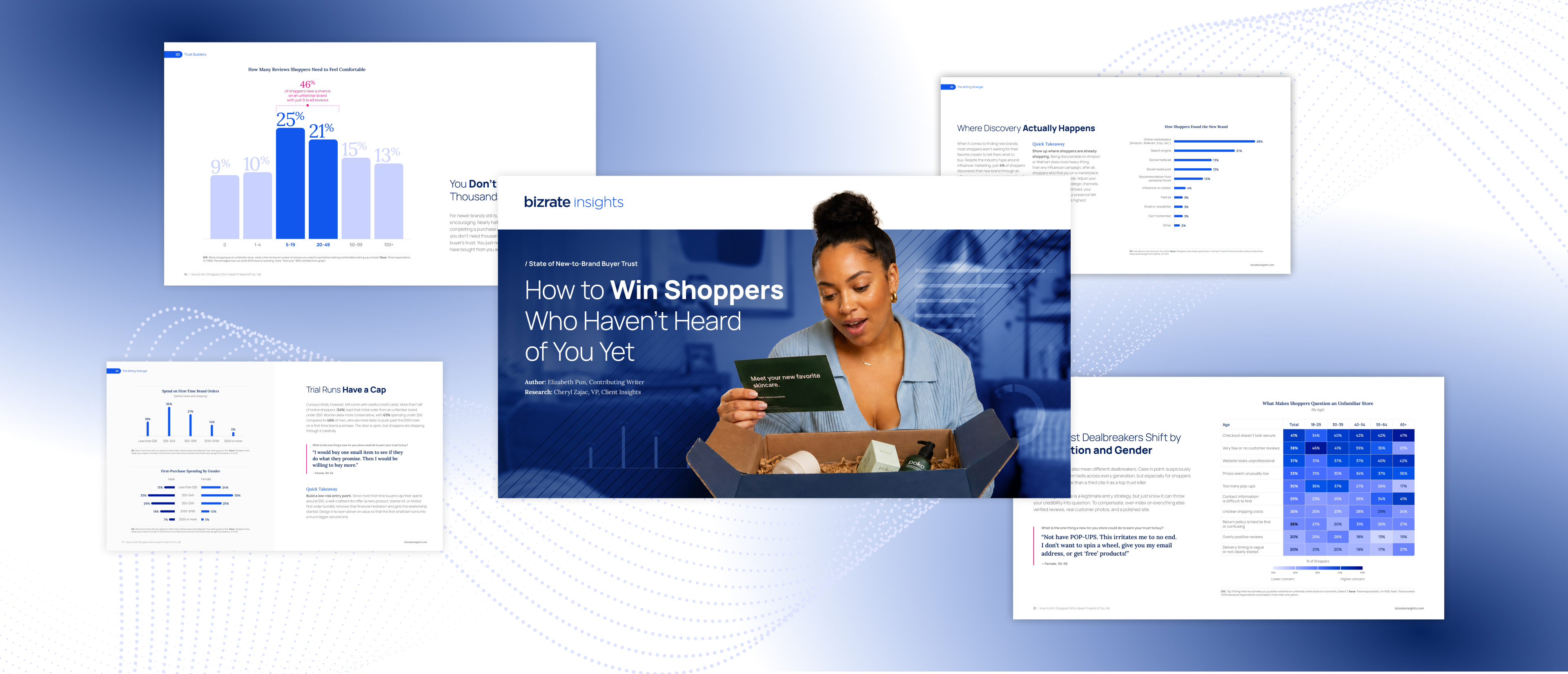
First-time buyers are out there, and they’re willing to spend with you if you can put them at ease. Our latest research shows what helps shoppers feel ready to take a chance on a new brand.

New back-to-school shopping data shows shoppers are blending online and in-store channels, spending more, and looking for convenience, value, and confidence.


