/ resources
June 11, 2024


Writer, Bizrate Insights
Direct-to-consumer (D2C) businesses have something that many traditional brands don’t: direct access to their customers. This is a valuable superpower in the ecommerce industry as it enables you to offer your audience exactly what they need, be it unique products, better prices, satisfaction guarantees, or all the above.
D2C exploded onto the retail scene in the early 2010s with startups like Dollar Shave Club and Warby Parker, selling a limited scope of products directly to the consumer using newly available online marketing and sales channels. But vertically integrated retail has been around since the beginning. Any retailer who sells the products they make themselves could be defined as having a DTC arm.
This includes smaller retailers and crafters who sell their handmade goods directly to customers, such as those who operate on platforms like Etsy. These DTC sellers can take advantage of their direct connection with buyers to offer personalized products, communicate their brand story, and build lasting customer relationships.
Let’s examine the direct-to-consumer business model, current online shopping trends, and practical strategies for attracting and retaining D2C customers.
In a D2C business model, brands sell their products directly to consumers without going through a middleman such as a wholesale distributor or multi-brand retailer. Recent data shows that D2C sales in the U.S. surpassed $128 billion in 2021 and are forecast to jump to almost $213 billion in 2024 — quite the leap.

The rapid rise of ecommerce and social media has made direct-to-consumer sales a more viable and appealing option for many brands. Not only can D2C companies interact directly with their customer base, but they can control the entire sale process from start to finish. The biggest obstacle? Convincing shoppers that buying direct is in their best interests.
In March 2024, we surveyed 1,000 online shoppers to learn where they shop and why. One area of interest was identifying what pushed shoppers to D2C retailers. Our findings revealed three primary reasons why customers choose to go direct:
You can check out our Shopper Insights Brief, Understanding Where Customers Shop and Why, for a more holistic understanding of why shoppers choose certain channels and how they may be persuaded to switch.
So, how do you become a D2C success story like Glossier or Dollar Shave Club?
To learn how to effectively cater to D2C buyers, we asked survey respondents to recall the best purchase they had made direct from a brand — but more importantly, why it was a positive experience. Their responses provided us with valuable insights on how to win buyers over.
Our survey revealed that exclusivity plays a pivotal role in attracting shoppers to D2C channels. This desire for unique products not only drives direct engagement but also elevates the perceived value of what your brand has to offer.

And offering variety is just the beginning — another game-changer comes from providing exclusive customization or personalization options that cater to the shoppers’ individual tastes and preferences. Customers want products that feel personal and unique, and they are willing to buy directly to get them.

It is still possible to use mass merchants such as Amazon to distribute limited products, but the idea is to save the best items for buyers who purchase directly from you. Many brands choose to do this to reach a wider audience while keeping exclusive product lines or customization options available only to those who purchase direct.
Eliminating the middleman can increase profits in a D2C model, and passing these savings on to your customers can give you a significant advantage. Shoppers need to know how purchasing directly from your brand ensures they can enjoy cost savings without any compromise on quality.
This strategy not only appeals to price-sensitive consumers but also underlines the added value they get by choosing your website over traditional retail channels. To further attract customers and boost conversions, consider implementing special promotions or exclusive discounts for those who make direct purchases.

You can also develop a loyalty program to encourage repeat purchases and build positive customer relationships. Some examples include rewarding customers for their engagement and spending with perks like early sale access, birthday rewards, and VIP experiences.
Storytime: Funko previously collaborated with us at Bizrate Insights to learn more about their D2C customers. Initially, Funko believed that their flat-rate shipping fee might be deterring customers from completing a purchase. However, feedback from surveys indicated that their client base — primarily collectors — cared less about shipping costs and more about the condition of their items upon delivery.
In response, Funko kept the shipping fee but ensured that their items arrived in excellent condition by putting more care into their packaging. Ultimately, Funko saw a 10-point increase in its Net Promoter Score after working with us.
You can read the full Funko case study here.
This is just one example of why it’s important to know what shoppers value. Your customers may have different priorities than those of your competitors. Fortunately, a direct-to-consumer model enables you to connect with your audience and gain a better understanding of their needs and desires regarding your product.
Providing a strong satisfaction guarantee can boost customer confidence when purchasing directly from your business. This type of promise can alleviate concerns about making a purchase, as shoppers know they can return the item without any hassle if it doesn’t meet their expectations.
![Quote: “[My Bose] product arrived in 2 days with a 90-day evaluation period and free returns.”](https://i0.wp.com/bizrateinsights.com/wp-content/uploads/2024/06/bcc_127_bosequote.png?resize=1024%2C386&ssl=1)
Making the return process easy demonstrates that you prioritize customer satisfaction. Even if a problem arises, addressing it positively can foster customer loyalty and lead to positive recommendations.
Counterfeit products are becoming more prevalent, and shoppers are wary of spending their hard-earned money on fakes. Purchasing directly from your brand can give them a sense of security about the quality and authenticity of the product they are buying.
Highlighting the authenticity of your products may persuade more people to buy direct. This is especially true for high-value or luxury items. Don’t forget to showcase any certificates and provide information about the product’s origin and manufacturing process so customers know exactly where their purchase is coming from.
Direct-to-consumer brands have the unique advantage of directly engaging with customers, meaning you can offer them exactly what they desire at a reasonable price. Customer preferences may vary, but the D2C approach enables brands to establish an honest connection with their audience, gaining insightful feedback and helping them stand out in the competitive world of ecommerce.
Visit Bizrate Insights if you’re interested in tracking shopper behavior trends and refining your customer experience strategy. Take the first step by booking a demo or starting an account today.
Our free 44-page Shopper Insights Brief contains even more customer-generated stats to help you plan your channel strategy. Grab your copy today.
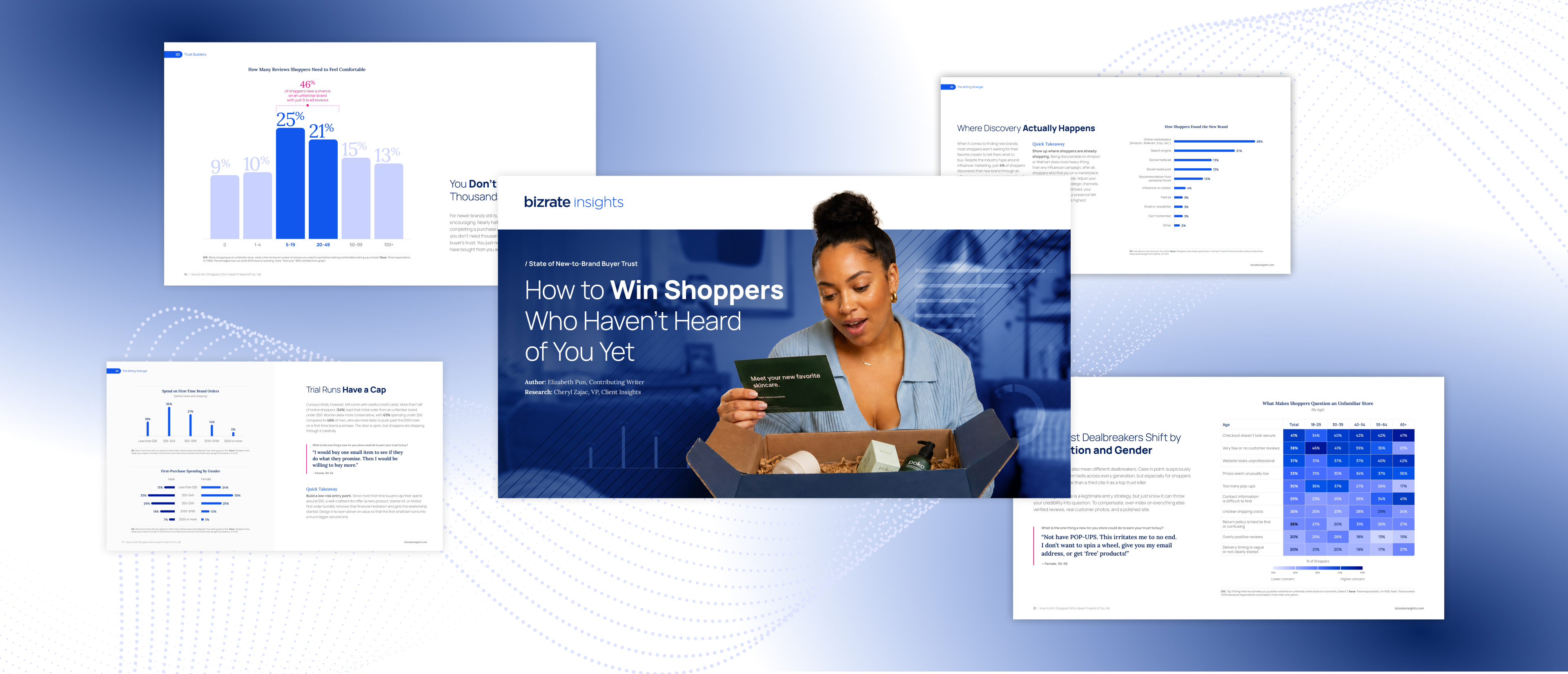
First-time buyers are out there, and they’re willing to spend with you if you can put them at ease. Our latest research shows what helps shoppers feel ready to take a chance on a new brand.

New back-to-school shopping data shows shoppers are blending online and in-store channels, spending more, and looking for convenience, value, and confidence.
Introduction A customer orders from your brand, has a terrible delivery experience through DoorDash or Instacart, and leaves a...


