/ resources
November 7, 2024


Content Director, Bizrate Insights
Drawing insights from 1,000 digital shoppers, our August 2024 survey paints a vivid picture of a diverse and evolving fashion market. From the browsing habits of Gen Z to the purchasing preferences of seasoned online shoppers, the nine trends we’ve identified offer a comprehensive look at how consumers navigate the virtual aisles of fashion.
Each trend offers you an opportunity to excel in the competitive and complex fashion world.
Browsing your favorite retailers and gathering ideas from friends and family top the list of ways shoppers are inspired.
We all tend to have our “go-to” retailers, and when the mood strikes, we visit them to see what’s new and on sale and sometimes make a purchase. It’s not easy to get on a shopper’s shortlist, as one in three say they tend to purchase from a handful of sellers.
Those aged 18-39 spend significantly less time than average browsing their favorite retailers (59%) and visiting brick-and-mortar stores (42%) than all other age groups. Their buying behavior is still being solidified, so you must inspire them more creatively.
Brick-and-mortar still has a role to play in fashion since finding just the right size is no small feat. So it makes sense that 46% favor stores/sites where they have experience with their products, size, and service — it’s hard to beat familiarity.
Older shoppers go where they can make the best choices, as reflected in the fact that those 55-64 (59%) and 65+ (71%) head to stores. It’s easier to deal with inconsistent sizes when they’re right in front of you.
As omnichannel adoption has increased, the dual role of both channels is straightforward. 24% say they appreciate the flexibility of both in-store and curbside pickup.
Interestingly, 26% of surveyed shoppers said that physical stores have limited inventory, so they prefer to shop online. Only 13% felt that poor store service keeps pushing them to shop online.
All these findings reinforce that it’s still a multi-channel world.
OPPORTUNITY: Put your best foot forward in each channel so they coexist and best deliver the brand experience based on your shoppers’ needs.
Shoppers gravitate to what is new on the shelf or highlighted on the site. For 38%, fresh products top the list of merchandising features that drive decision-making. As fashion trends often focus on new, they were a factor for 29% of those surveyed, complementing the latest and greatest.
Shopper habits that support the role of “new” should be called out. They include browsing online to keep abreast of fashion trends (26%) and looking for new brands and stores (22%).
1 in 5 say they typically update their wardrobe each season.
New seems to matter more to younger shoppers, as seen by the numbers below.
OPPORTUNITY: Aggregate new products in navigation and integrate at the category level to guide shoppers for better positioning and more significant margins.
We focus on the online channel and its ability to deliver for fashion buyers. Positively, 24% shop weekly or more, with an additional 36% purchasing at least monthly.
Their actions show the purchasing prowess of younger shoppers. Our results reveal that shoppers aged 18-29 are the most aggressive. 42% of those 18-29 and 36% of those 30-39, compared to the 24% average, are shopping weekly or more. Growing up online, the internet is vital in their fashion shopping. They appreciate the convenience and have learned to shop successfully online, embracing the tools and technology that support the fashion category.
6 in 10 shoppers complete more than 26% of their fashion shopping online.
Shoppers 40-54 can be considered in the prime of their shopping, with 65% spending more than 25% of their fashion budget online. Other age segments are relatively consistent in their online penetration except for the 65+ segment, which indexes lower at 49%.
OPPORTUNITY: Elevate the online experience to ensure online shopping is effortless, efficient, and fun.
Like most categories, Amazon dominates. One difference with fashion is that department stores are an essential sector, with 4 in 10 shoppers spending money on fashion in the past six months. Brand sites also play an outsized 34% role in capturing shoppers’ attention and wallets. Online marketplaces also find themselves in a strong position as 1 in 3 have purchased via this means.
Mass merchants, like Walmart and Target, remain essential at 40% and 24%, respectively. The diversity of sellers can be seen in the findings where off-price retailers, warehouse clubs, and specialty retailers are in play for 1 in 5 survey respondents.
OPPORTUNITY: Understand the competitive landscape. Innovate with new models while optimizing existing experiences.
Next, we looked at the website features that help shoppers make fashion decisions. Our focus is on information, logistics, and category-centric dynamics.
Generational insights
Significant gaps exist between the 18-29 and 55-64 segments. Youth interest tends to be strong in videos, influencer recommendations, and fashion trends. Their older counterparts take the greatest interest in the nuts and bolts of inventory and delivery information, sizing tools, and product images. Interestingly, they index high on the ability to customize products, which is not what one might expect.
Information is integral to fashion decision-making
The right decisions require complete and clear copy coupled with solid product imagery. These images help replace the tactile experiences of store-based shopping and give customers the confidence to add items to their carts.
Inventory and delivery transparency are essential
As 56% of survey respondents suggested, online shoppers appreciate knowing the availability of fashion products that may interest them. At the same time, 53% want to know how long it will take for orders to arrive. Being transparent with both aspects can prevent shoppers from abandoning their carts and purchasing at one of your competitors.
Category-centric features facilitate more confident buying decisions
One of the most challenging aspects of online fashion shopping is getting your size right. Even with retailers you are familiar with, they may change their sizing, making it virtually impossible to get it right, so tools that can assist in this effort are well received. This is why many retailers provide sizing information such as “runs true to size” or “runs small, go up a size.” Additionally, peer reviews are invaluable to making more intelligent decisions. Many of us have also taken advantage of profiling tools to make a more informed decision. Such tools typically ask questions about taste, size, and shopping interests to guide the experience. Technology can help refine recommendations to get closer to a shopper’s preferences over time. Lastly, customization plays a role in the desire for individuality, allowing shoppers to make their creations.
OPPORTUNITY: Audit the information you deliver on the product page to ensure it meets and exceeds shopper requirements.
Showcase product availability on the product page and shopping cart. Make delivery information clear and reinforce through post-order communication.
Integrate tools that smartly guide decision-making.
A quarter of online shoppers suggest that their online experience is well personalized, while just over half believe it is somewhat personalized. Perhaps the younger generation is on to something, as 35% of those 18-29 and 37% of those 30-39 believe their experiences fall into the well-personalized camp. On a side note, personalized product recommendations were seen as a fashion decision-making feature by 23% of those surveyed.
Interestingly, only 7% believed that artificial intelligence (AI) is changing how they shop for fashion, though once again, those 18-29 and 30-39 expressed its more significant role at 11% and 10%, respectively. This will be something to watch in the coming years, as its impact will likely be felt.
OPPORTUNITY: Revisit personalization strategies leveraging AI to drive performance.
It’s instructive that 31% of surveyed shoppers only buy fashion items when they are on sale. Older shoppers are more sensitive to promotions as only buying on sale is elevated among those 55-64 (43%) and 65+ (42%).
Just under half of those surveyed say that their online fashion purchases usually include a promotion other than free shipping.
Free shipping always makes its way to the top, with 3 in 4 online shoppers expressing a preference for free shipping. Beyond the perennial favorite, the percentage off purchases remains powerful online, as actual savings can be realized. Also of note, among one in three shoppers are loyalty program discounts (39%), flash sales/limited-time offers (37%), and BOGO (Buy one get one free) (30%).
Demographically, free shipping is desired more by shoppers 40+, while receiving a percentage off a purchase resonates more with the 55+ market. What’s more, first-time shopper discounts are more attractive to younger audiences (18-39) as many stores are new to them.
OPPORTUNITY: Be on heightened alert for having sharp prices with a constant deal flow in the pipeline.
Inspiration for younger shoppers more often comes from social media feeds, fashion blogs, and influencers. The numbers below suggest that those 18-29 are up to 3x more likely than those 55+ to find inspiration from each of these social media sources.
Digging deeper, we see many ways social media influences online fashion experiences. The top three include getting inspired about brands, products, and looks (28%), clicking on advertisements from apparel/accessory retailers (27%), and learning from others (25%).
One cautionary note: it’s important to remember that social media is not part of their fashion experience for a quarter of those surveyed. Age reveals disparate online behavior patterns here, as shoppers 55-64 (47%) and 65+ (56%) say social media is not part of their fashion buying process.
In the use of social media, we see the most significant behavior differences among age groups.
OPPORTUNITY: Assess social media’s role for your audience — test tactics to see what resonates, from inspiring shopping to purchasing.
Ideally, customer service causes conversion and long-term retention. The interaction types that were most likely to drive purchasing were email (28%) and social media interactions (27%). Rounding out the top three was an in-store interaction or an appointment with a store associate (26%).
Incidentally, 17% cited customer service chat as a fashion decision-making tool, consistent with the findings below.
OPPORTUNITY: Don’t discount the role service can play for online shoppers. Deliver exemplary service throughout the entire shopping experience.
Conclusion: Stay On Top of Your Game With an Experience That Resonates
Fashion is a year-round staple for shoppers. An ongoing evaluation of web features ensures you are competitive with best-in-class sellers. Innovation comes from execution that inspires consumers and converts them to customers. Testing personalization and exploring AI may provide a new revenue-generating opportunity. Social media is a must for young audiences, so knowing your customers is an important starting point. Showcasing the latest and embracing the best in technology ensures you stay on the right path to growth and profitability.
If you’re interested in measuring your customers’ experience and applying their feedback to your online business, book a demo with Bizrate Insights today.

Qualtrics is one of the best customer experience and market research platforms on the market, but not every ecommerce...
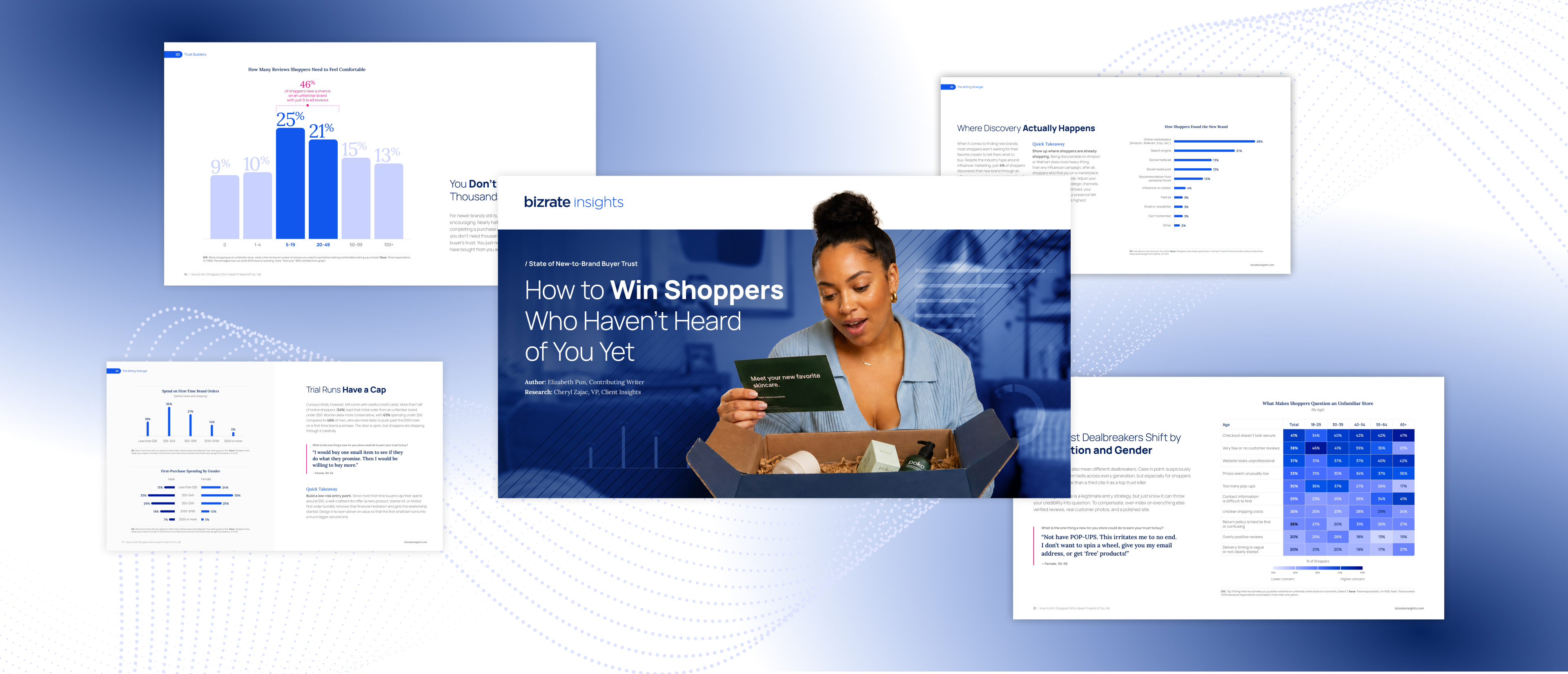
First-time buyers are out there, and they’re willing to spend with you if you can put them at ease. Our latest research shows what helps shoppers feel ready to take a chance on a new brand.

New back-to-school shopping data shows shoppers are blending online and in-store channels, spending more, and looking for convenience, value, and confidence.


