/ resources
May 9, 2024


Writer, Bizrate Insights
Ecommerce is now a fiercely competitive industry, and many retailers are wondering how to stand out when competing with retail giants like Amazon and Walmart. To successfully carve out a market niche, it’s essential to understand where customers shop and why they choose these channels over others. We recently compiled data and valuable insights on customer shopping behavior to answer these questions.
We surveyed 1,000 online shoppers in March 2024 and found over 40% of customers are comfortable buying from at least six types of retailers. These are the retailers that respondents reported purchasing from in the past year:
We also asked shoppers to rank the top three retailers where they shopped the most. Amazon and Walmart were neck and neck for the number one pick among respondents, far exceeding other store types:
But why are customers so drawn to Amazon in particular? Our survey revealed some interesting insights.
Amazon has become synonymous with convenience, vast product selections, and a seamless shopping experience. However, understanding why customers shop there requires a deeper dive into their preferences and decision-making processes.
Our survey found that 1 in 3 shoppers typically buy from Amazon and a handful of other retailers. For shoppers 55 and older, that ratio was even higher. We discovered four main reasons behind Amazon’s appeal:
However, to better understand online shopping behavior, we must recognize that priorities tend to differ across age demographics.
Our survey revealed some distinct differences in customer values across age groups. When shopping online, older shoppers were more concerned with fundamentals such as time, convenience, and savings. In contrast, younger shoppers were more concerned with innovation and personalization.
Key differences in older shoppers (65+) vs. younger shoppers (18-29):
Competing directly with Amazon may be challenging, especially with the age factor. But by prioritizing customer needs, you can encourage shoppers across age segments to switch between ecommerce channels.
Key finding: Customers pivot to direct-to-consumer channels when they’re offered exclusivity, variety, and better product knowledge:
The strategies you prioritize will obviously vary depending on the age demographic you’re targeting. However, we’ve identified four key areas that are worth focusing on.
Prices and promotions are crucial for staying competitive in the market. When we asked customers what influenced them to switch shopping channels, 59% named pricing as a factor. This doesn’t always mean being the cheapest option but providing the best overall deal when considering product quality, customer service, and additional benefits.
Pricing doesn’t stop there — customers also care about minimizing shipping and return fees. In our survey, 46% of shoppers named free shipping as why they chose Amazon, while 23% said easy and free returns were top of mind. Many consumers have come to expect free shipping as a standard service, and it can be a deciding factor when choosing between similar products. Meanwhile, offering free returns lowers the risk for the customer and can increase their confidence, making them more likely to convert. One recent survey found that 87% of shoppers would consider not shopping at a retailer that eliminated free returns.
Customers place a high value on product availability and information. According to our survey, 42% of shoppers were influenced by product availability when selecting their shopping channel, while 24% valued the quality of product information. Other recent data found that 67% of consumers consider inventory visibility an important service. Showcasing in-stock products, offering detailed information, and using high-quality images with accurate product representation are all good practices in this area.
Most customers appreciate a personalized shopping experience, particularly younger shoppers ages 18-29. Overall, 61% saw personalization as a positive, but this number jumped to 81% for younger shoppers.
Customers want to feel valued. One survey showed that 72% of shoppers expect retailers to recognize them as individuals and know their interests. But focusing on personalization tactics doesn’t have to be a huge undertaking. A good place to start is your search functionality — you want your customers to find what they’re looking for quickly and efficiently. This could simply mean the ability to turn vague searches into useful product recommendations or intuitive filtering and sorting options designed to guide customers to what they need.
As we know, customers want to feel appreciated and valued, and customer support plays a huge role in achieving this. A key aspect to consider is your delivery services. According to our survey results:
Make sure you deliver products quickly and as promised, with processes in place to assist the customer promptly if something goes awry. Being proactive in these areas will help ensure satisfaction and build customer loyalty.
To succeed in the competitive world of ecommerce, retailers must understand and adapt to customer preferences and behaviors. Our survey has highlighted the importance of several factors in attracting and retaining customers, including pricing, product availability, personalized experiences, and exceptional customer service. It’s also crucial to recognize that age plays an important role in determining which strategies to prioritize, with older shoppers valuing fundamentals like convenience and savings, while younger shoppers lean more toward innovation and personalization.
By focusing on these fundamentals and tailoring strategies to different age demographics, retailers can differentiate themselves from mass merchants, build customer loyalty, and ultimately increase their market share.
Download Our Shopper Insights Brief
Our free 44-page Shopper Insights Brief is packed with even more customer-generated stats you can use for planning your channel strategy. Grab your copy today.

Qualtrics is one of the best customer experience and market research platforms on the market, but not every ecommerce...
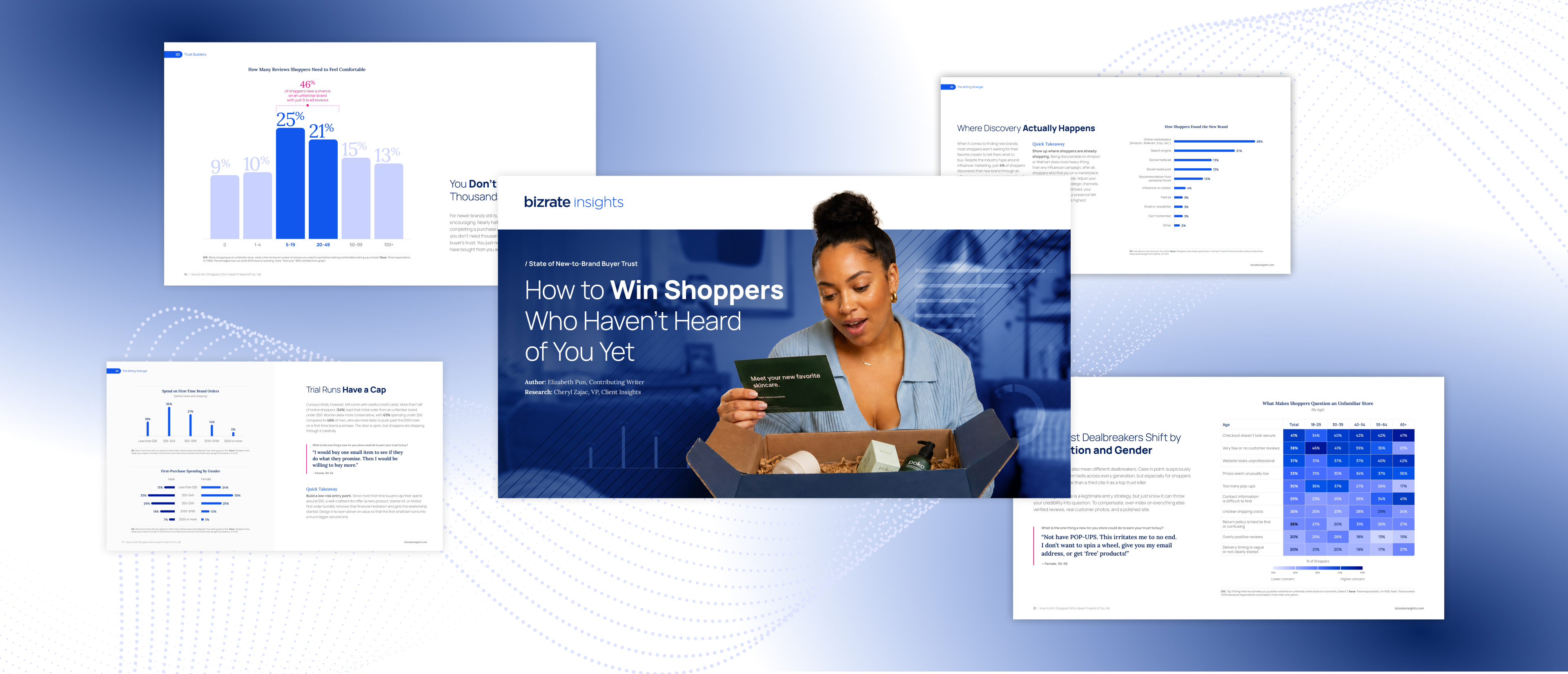
First-time buyers are out there, and they’re willing to spend with you if you can put them at ease. Our latest research shows what helps shoppers feel ready to take a chance on a new brand.

New back-to-school shopping data shows shoppers are blending online and in-store channels, spending more, and looking for convenience, value, and confidence.


