/ resources
March 11, 2025

Guest Writer, Bizrate Insights
If you follow fashion statistics, you might predict the occasional trend — suede fabric is expected to grow 17% among women between July and September, for example. But for the most part, trends are cultural moments you simply have to choose to hop on and off as a brand. Timing is everything, and capitalizing on trends means being on your toes and ready to pivot.
Let’s look at how you can begin to spot the inevitable trends, stay agile to capitalize on surprise trends that crop up, and position your ecommerce shop for what’s sizzling by summer.
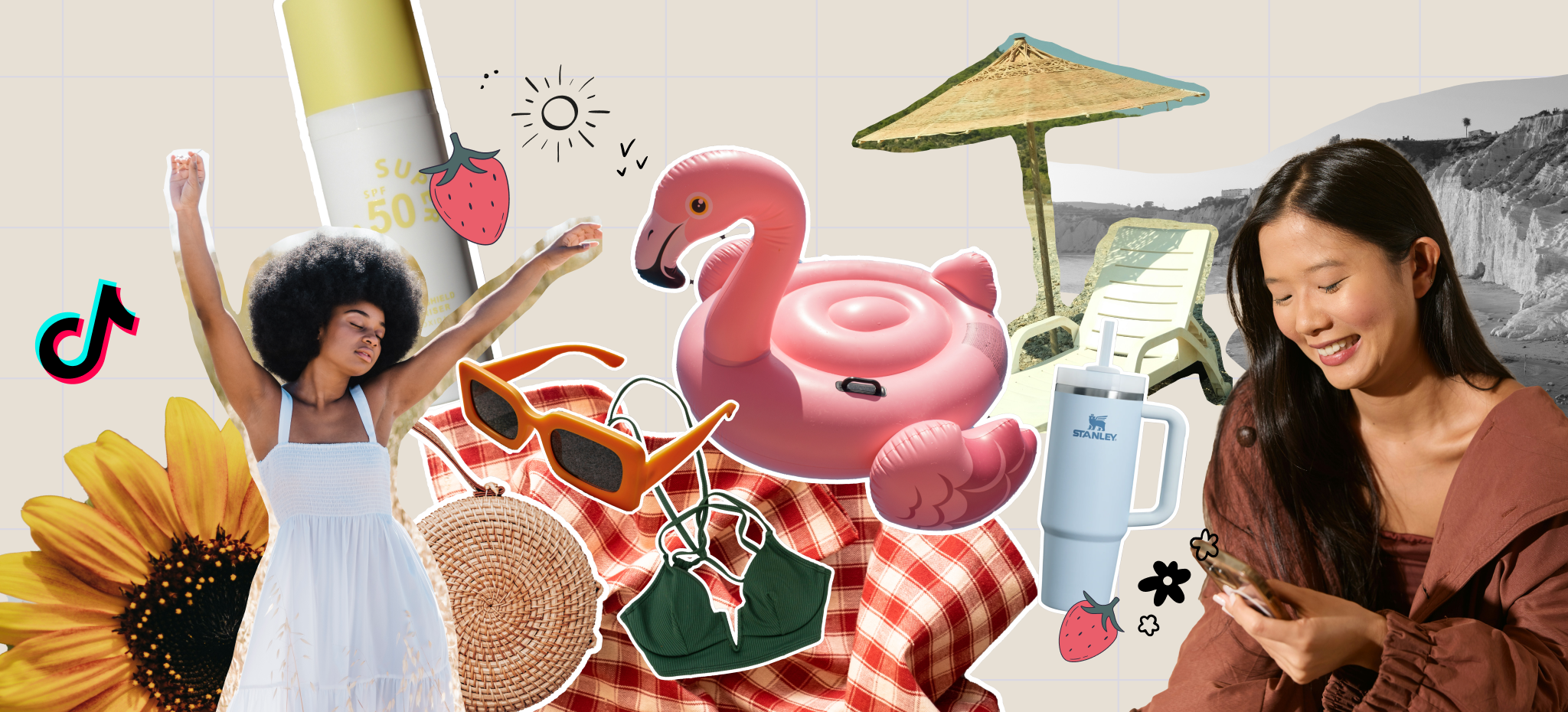
Sometimes, spotting trends is all about paying attention in the right places. For example, a surge of motorized floaties on TikTok piqued interest in the same products during the summer of 2024. If you’d been tracking influencer content on TikTok and Instagram reels for trends, you might have spotted that one coming.
But scrolling TikTok isn’t always enough. You can get more strategic about where you can position yourself for spotting summer trends:
Once you’ve gotten good at spotting trends, it’s time to position your products accordingly:
Once you’ve spotted a trend, you’ll want to position your products appropriately — sometimes leveraging visuals with new photographs. For instance, have you invested in summer-ready, lifestyle-focused product photography? Or are most of your products sitting on a stage with a clean, formless background?
Summer has a distinct look: sun, sand, blue skies, and green grass. Bright colors tend to capture attention online more than muted autumn colors, which should work to your advantage. Consider staging photos of your summer product bundles to capture the hottest trends you researched above.
In our post about social media shopping trends, we noted that social media’s use of curated content, scarcity, and limited-time offers can induce fear of missing out (FOMO), prompting impulse purchases. According to TrustPulse, 60% of people make purchases because of FOMO, most occurring within 24 hours of the experience.
That’s especially true for summer trends. Customers know these summer trends aren’t going to last forever. September will be just around the corner, the bundles will be gone, and the trend will have lost its staying power. To capture the buzz and excitement — and maybe induce a little FOMO — consider creating limited-time offers or limited-supply offers. To get these promotions in front of your eyes, you might consider collaborating with micro-influencers to amplify your reach, too.
Surfing the wave of a summer trend can be a great way to move inventory and capture more
attention — but there are some risks of falling off the board. To avoid these pitfalls, make sure you adopt some strategies:
On the latter point, you’ll need significant customer feedback and insights to squeeze as much informational juice out of each trend. Maybe not every trend will be a hit. But every trend will be an opportunity to learn more about your customers. You’ll learn why they buy and don’t buy and what about your offering made them click “add to cart.” If you want to start collecting customer feedback in advance of a new summer trend, register with Bizrate Insights today to find out what your customers are thinking.

Discover how to bridge the gap between raw data and actionable strategy through human-led VoC analysis, identifying the root causes that automation misses.

Updated 4/20/2026 For a PDF download version of this report: Download Now The Win-Win Potential of Ecommerce and Nonprofit...

Explore the "sisters, not twins" relationship of NPS vs CSAT and learn how to use these complementary metrics to bridge the gap between transactional satisfaction and long-term brand loyalty.


