/ resources
March 23, 2026

Vice President, B2B Marketing, Bizrate Insights
Updated 3/23/2026
For a PDF downloadable version of this report: Download Now
According to Bloomberg Businessweek, 60% of defecting customers describe themselves as ‘very satisfied’ just before they leave. That’s enough to send shivers down the spine of any retailer. This striking disconnect between what shoppers say and what they do reveals a fundamental truth about customer relationships: you’re never really safe.
But the more sophisticated your customer experience strategy becomes, the more critical it is to ask: Is NPS actually driving loyalty, or just describing it?
Used in isolation, NPS can be a vanity metric. But used intelligently, it can become one of your strongest tools for identifying, nurturing, and retaining your most loyal customers. The key is making the leap from attitudinal loyalty to behavioral loyalty—and using NPS as the bridge.

NPS was designed to measure attitudinal loyalty, a customer’s surface inclinations, and likelihood to recommend. A high NPS suggests that customers feel positively about your brand and may even advocate for it. That emotional commitment is valuable. Bain & Company, which developed the NPS framework, found that companies with leading NPS scores tend to grow more than twice as fast as their competitors.
But intent isn’t everything. Behavioral loyalty is what customers actually do: renewing, buying again, referring others, sticking with your brand even when things go wrong. That’s where loyalty translates into revenue.
The challenge? These two types of loyalty don’t always line up.
As we’ve seen, highly satisfied customers still leave, particularly in crowded markets. Meanwhile, some customers who rate you poorly might continue buying out of necessity, convenience, or lack of alternatives.
That means a high NPS can lull you into a false sense of security unless you tie it directly to behavior.
Despite its limitations, NPS can absolutely be a driver of loyalty when it’s used as part of a broader system that connects sentiment with action. Here’s why NPS is still worth your time:
Customers who rate you a 9 or 10 aren’t just satisfied, they’re emotionally invested. They feel good about your brand and are willing to stake their reputation on it. That emotional intensity is a predictor of long-term loyalty and referral behavior.
This emotional investment represents a unique opportunity. When customers reach this level of connection, they’re not just willing to continue purchasing—they’re primed to become genuine advocates. They’re more resilient to competitive offers, more forgiving of occasional missteps, and more likely to expand their relationship with your brand over time.
NPS is deceptively powerful as an internal rallying point. Its simplicity makes it easy to share, benchmark, and track over time. Teams across the organization can understand it and contribute to improving it. That shared focus helps shift businesses from reactive to proactive loyalty building.
This easy-access metric can transform customer experience from a single department’s initiative into an organizational mindset, where everyone understands their role in the loyalty equation. When the entire company rallies around improving the same customer-focused number, silos begin to dissolve and cross-functional collaboration flourishes.
A high or low NPS score is a moment of momentum. A promoter is primed to advocate. A detractor is at risk of churn, but also likely to share what went wrong. These are decision points. Used properly, NPS becomes a trigger for you to engage, not just a report card.
These inflection points close quickly if not seized. Customers who take the time to rate their experience are more open to further dialogue. Organizations that respond swiftly to these signals can leverage promoters’ enthusiasm while it’s at its peak or intervene with detractors before negative sentiment calcifies into walking away.
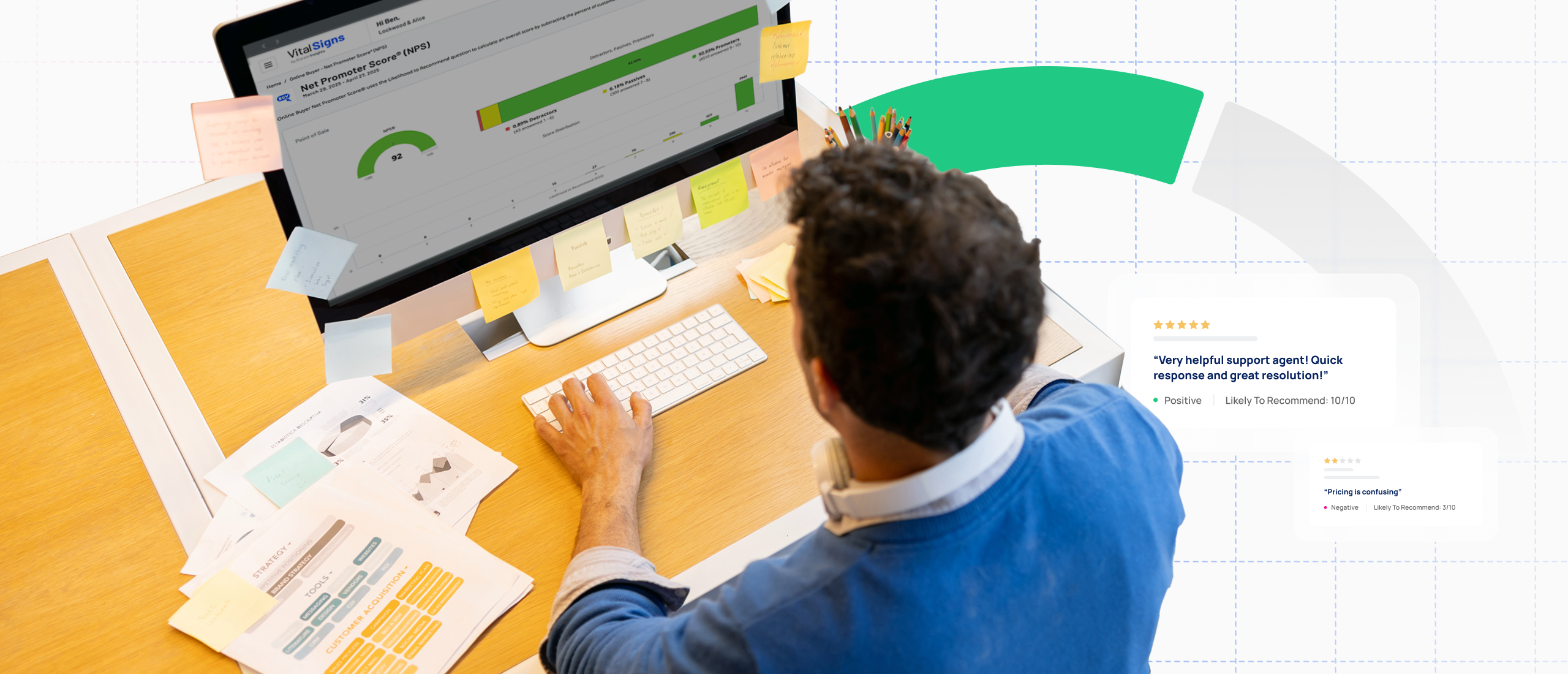
While the NPS score gives you a succinct signal, it’s the open-ended follow-up that provides the context necessary to act with precision. Verbatim responses reveal the specific moments and experiences that shape customer sentiment. Are promoters calling out a helpful support agent? A seamless onboarding flow? Are detractors frustrated by pricing confusion or product bugs?
But verbatims are just one part of the story. When paired with supporting metrics across the customer journey, like ease of use, order accuracy, or resolution time, you begin to see which aspects of the experience most strongly correlate with Likelihood to Recommend (LtR).
This layered view allows you to prioritize improvements that are more likely to move the needle on loyalty.
Without this combination of narrative and data, you’re just chasing a number. But when you tie verbatims to experience metrics and LtR trends, you can design customer journeys that actually build loyalty, not just measure it.
Without these narratives, you’re just chasing a number.

Companies that operationalize customer feedback—not just collect it—are more likely to outperform their competitors in both loyalty and revenue growth. Here’s how to get the most out of your NPS system.
Use manual review or analytics tools, or even AI, to group feedback thematically. This lets you identify which themes correlate with high or low scores, and act accordingly.
Was the customer checking out? Post-purchase? Mapping verbatims to touchpoints helps teams understand which parts of the journey drive loyalty or friction. When is one step closer to why.
If “slow response time” appears in 35% of detractor comments, it’s no longer anecdotal—it’s a roadmap
priority. Translate frequent themes into product changes, training initiatives, or policy updates.
Don’t let feedback live in a spreadsheet. Build a Slack channel, create monthly “customer voice” roundups, or read verbatims in all-hands meetings. It builds empathy, drives urgency, and connects teams to real impact.
So how do you move beyond measuring attitudinal loyalty to actively cultivating behavioral loyalty Here’s how leading brands are using NPS to close the gap.
The most important step is tying NPS responses to downstream behaviors:
Start by connecting NPS data with customer IDs, order histories, loyalty status, or engagement metrics. This lets you build loyalty profiles that link sentiment to real-world outcomes. If your 9s and 10s aren’t behaving differently than your 7s and 8s, you may need to revisit how you’re segmenting, interpreting, or following up
As we’ve seen, the NPS number is only half the story. Without open-ended responses, you have no insight into why someone gave a particular score or what to do about it.
Promoters often highlight specific loyalty drivers, such as seamless returns, great support, or unexpectedly fast delivery. Detractors reveal friction like confusing UX, long hold times, or product inconsistencies. This feedback helps you prioritize investments that reinforce loyalty behaviors, not just improve satisfaction.
By categorizing this feedback, you can surface themes by persona, channel, or journey stage.
NPS isn’t just a metric; it can trigger deeper engagement. Use real-time NPS feedback to launch journeys that encourage loyalty-building behaviors.
Prompt them to refer a friend, write a review, or join a loyalty program.
Offer incentives to deepen engagement, like exclusive content, tips, or service enhancements.
Escalate to a personalized recovery path. Route them to support. Follow up with a real human.
When thoughtfully timed and personalized, these journeys help transform positive sentiment into tangible action and help close the gap between how customers feel and what they do.
Not all promoters are equally valuable. A brand-new customer rating you a 10 is likely reacting to early impressions. A long-term promoter who’s made multiple purchases, on the other hand, is a true advocate.
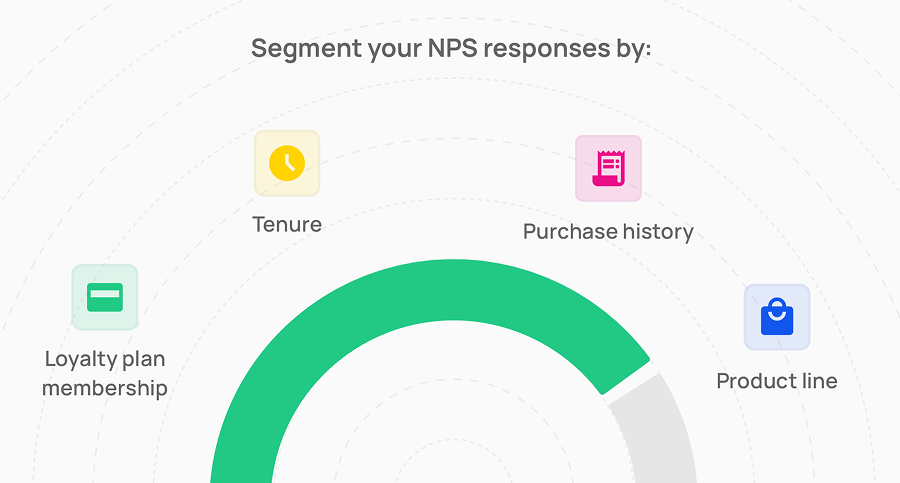
This helps you focus retention, upsell, and advocacy efforts where they matter most, and personalize your messaging accordingly.
NPS works best when it’s part of a broader loyalty intelligence system, not a standalone number. On its own, it tells you how a customer feels—but not why, or what to do next. To get a full picture, pair NPS with supporting metrics that both validate the score and add actionable clarity. These often include:
Individually, these metrics reflect different moments and emotional drivers in the customer journey. But together, they reveal patterns—and when analyzed alongside verbatim feedback, they help pinpoint the specific aspects of the experience that most strongly correlate with LtR.

When NPS is tied to behavior, it stops being a metric and starts being a flywheel.

NPS remains one of the most useful signals in your CX toolkit—but only when you use it as a means, not an end. The real value comes from what happens after the score:
Loyalty isn’t just about how people feel. It’s about what they do next. If your NPS program isn’t prompting behavior, you’re leaving value on the table.
So the next time someone gives you a 10, don’t just smile. Ask: What’s their next step? Then make it easy—and meaningful—for them to take it.
At Bizrate Insights, we help you turn those next steps into real business impact. Book a personalized strategy session to see how your feedback program can drive loyalty and growth.
For a PDF downloadable version of this report: Download Now

Our latest report breaks down the sharp decline in consumer sentiment and reveals how retailers can connect with cost-conscious shoppers through transparency and value.

Our 2026 ratings and reviews platform purchase guide provides a strategic framework for evaluating vendors, from syndication capabilities to advanced sentiment analysis.

Our 2025 report deconstructs the "fragile bubble" of shopper loyalty, revealing why nearly 9 in 10 consumers are switching to store brands and how stable pricing can save your brand allegiance.


